

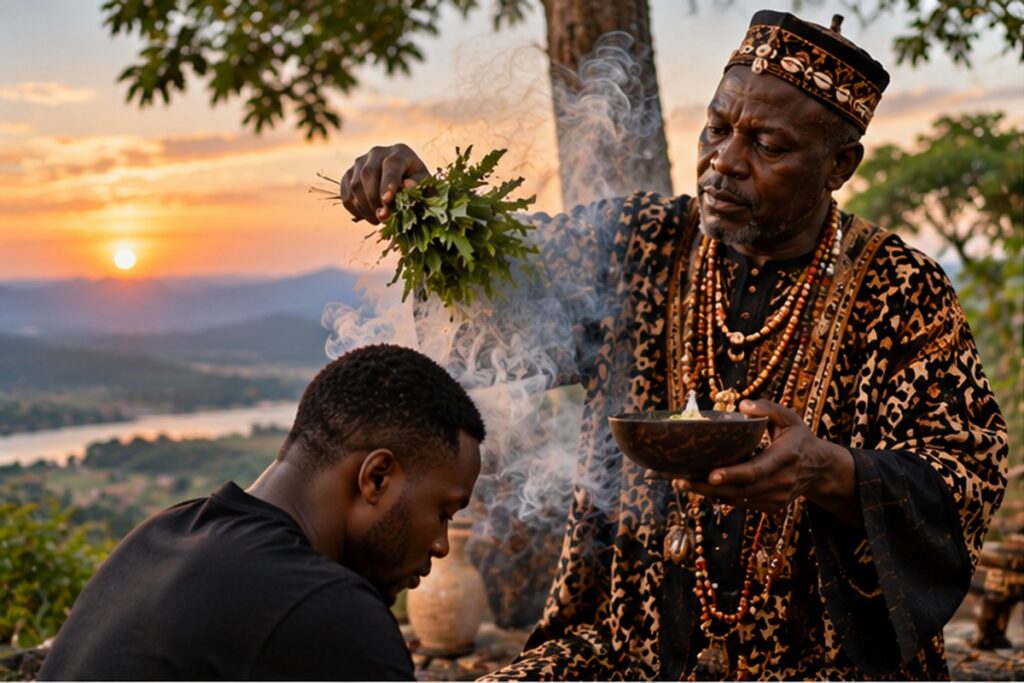
People have sought spiritual protection across cultures and generations.
For some, spiritual protection is connected with prayer, ancestral traditions, ritual practices, sacred objects, cleansing, herbs, or guidance from a spiritual practitioner. For others, it is simply a way of creating a greater sense of peace, confidence, and connection to their cultural or spiritual beliefs.
But what exactly is spiritual protection?
Is it an African tradition? What do people mean when they talk about protecting themselves from negative energy or spiritual harm? And how should someone approach spiritual protection responsibly?
This article explores these questions while making an important distinction between traditional spiritual beliefs and practices and claims that have been scientifically established.
What Does Spiritual Protection Mean?
Spiritual protection is a broad term.
Different communities and spiritual traditions use it to describe practices intended to help a person feel spiritually secure, protected, balanced or connected.
Depending on the tradition, this may involve:
- prayer or meditation
- traditional rituals
- cleansing practices
- herbs or other natural materials
- symbolic objects
- ancestral traditions
- consultation with a spiritual practitioner
- personal reflection and changes in behaviour
There is no single universal definition of spiritual protection.
The meaning depends heavily on the person’s culture, spiritual tradition and personal beliefs.
The World Health Organization recognizes that traditional medicine and related practices come from many different historical and cultural contexts and vary considerably between countries and communities. WHO also emphasizes the importance of cultural respect, evidence, safety, and appropriate regulation when traditional practices are used.
Is Spiritual Protection an African Tradition?
Spiritual protection is not uniquely African.
Different cultures around the world have developed their own approaches to spiritual protection, purification and ritual.
However, African societies have many rich and diverse spiritual traditions in which ideas about protection, community, ancestors, ritual and wellbeing have played important cultural roles.
It is therefore more accurate to speak about African spiritual traditions rather than one single African system.
Practices differ between countries, ethnic groups, families and generations.
What a spiritual practice means in Buganda, for example, should not automatically be assumed to have the same meaning in another African community.
This cultural diversity is important when discussing African spirituality.
Spiritual Protection and African Spiritual Traditions
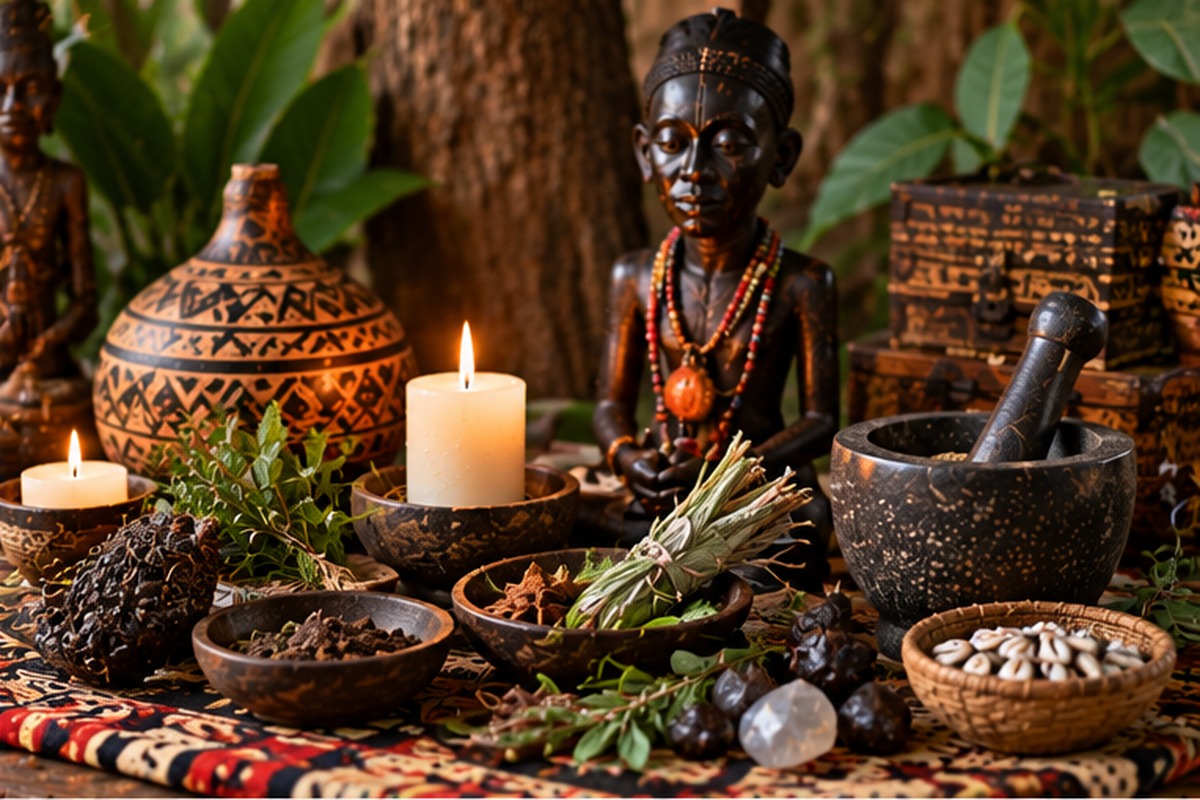
Within some African traditional contexts, spiritual wellbeing can be connected to relationships between individuals, families, communities, ancestors, nature and the spiritual world.
Traditional practitioners may have different roles depending on their community and training.
Some traditions emphasize:
- maintaining harmony
- respecting cultural traditions
- ancestral relationships
- ritual purification
- community responsibility
- protection
- healing
- guidance during difficult periods
The WHO Regional Office for Africa describes African traditional medicine as encompassing knowledge, skills and practices based on the theories, beliefs and experiences of different cultures.
That definition also highlights why it is important not to treat African traditional practice as a single standardized system.
What Do People Mean by “Negative Energy”?
The expression negative energy is commonly used in spiritual and everyday conversations.
Someone might use it to describe:
- an uncomfortable environment
- emotional heaviness
- repeated conflict
- fear
- stress
- a difficult relationship
- feeling spiritually unsettled
- experiences they interpret through their spiritual beliefs
However, “negative energy” does not have one scientifically established meaning.
A responsible spiritual practitioner should therefore be careful about presenting spiritual interpretations as proven medical or scientific facts.
For example, telling someone that every difficult experience proves that another person has spiritually attacked them can create unnecessary fear.
Spiritual guidance should help people make informed decisions rather than make them dependent on fear.
Can Spiritual Protection Guarantee That Nothing Bad Will Happen?
No responsible practitioner should promise that.
Life contains circumstances that no spiritual practice can guarantee to prevent.
A practitioner who promises:
“Nothing can ever happen to you again.”
or
“You will be completely protected forever.”
is making a claim that goes far beyond what can responsibly be promised.
At HerbalHealer, spiritual work is approached without guarantees.
The purpose is to provide traditional spiritual guidance based on the client’s situation and the practitioner’s cultural and spiritual practice—not to promise absolute control over everything that happens in a person’s life.
Spiritual Protection Is Not the Same as Physical Safety
This distinction is extremely important.
If someone is being threatened, stalked, abused or physically endangered, spiritual protection should never be presented as a replacement for practical safety measures.
For example, someone experiencing domestic violence may need:
- a safe place
- trusted family or friends
- professional counselling
- medical care
- legal assistance
- emergency services
Spiritual practice can be meaningful to someone personally, but it should not prevent them from seeking appropriate practical help.
The same principle applies to health.
Traditional medicine and spiritual practice have important cultural contexts, but WHO emphasizes that safety, quality and evidence matter when traditional practices or products are used.
What About Herbs Used for Spiritual Protection?
Plants and herbs have long histories in traditional practices.
But “natural” does not automatically mean “safe.”
Some plants contain biologically active substances, and herbal products can have risks involving toxicity, contamination, incorrect identification or interactions with medicines.
WHO has specifically highlighted the importance of monitoring the safety of traditional medicine products and strengthening systems for detecting adverse effects.
For this reason, HerbalHealer does not recommend that people experiment with unknown herbs, poisonous substances or potentially dangerous preparations.
Spiritual practice should never require someone to secretly put an unknown substance into another person’s food or drink.
What Might a Spiritual Protection Consultation Involve?
Every practitioner has their own approach.
At HerbalHealer, the starting point is conversation.
Carlos Mukuru first wants to understand what the person is experiencing.
He listens to:
- what has been happening
- what the person is worried about
- what they hope to achieve
- what they believe may be causing their difficulties
- what kind of help they are looking for
He then considers whether the situation is something he can genuinely help with.
If he believes he cannot help, he is prepared to say so.
If he believes traditional spiritual work may be appropriate, he explains what he believes is required before proceeding.
This consultation-led approach is important because spiritual protection should not automatically be presented as the answer to every problem.
What Should a Responsible Spiritual Practitioner Avoid?
There are several warning signs worth taking seriously.
A responsible practitioner should not need to frighten you into paying for a service.
Be cautious if someone tells you:
- you will definitely suffer unless you pay immediately
- they alone can save you
- your family member is secretly attacking you without evidence
- you must keep making increasingly large payments
- the result is 100% guaranteed
- they can control another person’s mind
- they can guarantee that nothing bad will ever happen
- you must perform dangerous rituals
- you must secretly give substances to another person
- you should stop necessary medical or professional care
These behaviours can turn spiritual guidance into fear-based selling.
Our separate guide explains more about the warning signs to look for when choosing a spiritual practitioner:
How to Avoid Spiritual Scams: 15 Warning Signs to Watch For
Spiritual Protection and Spiritual Cleansing
Spiritual cleansing and spiritual protection are related, but they are not necessarily the same thing.
Spiritual cleansing is generally associated with renewal, purification or letting go of what a person or tradition considers spiritually undesirable.
Spiritual protection is generally associated with maintaining a sense of spiritual security or protection after or alongside cleansing.
A person may therefore seek cleansing first and protection afterwards.
But these concepts vary between traditions.
There is no universal ritual sequence that applies to every African spiritual tradition.
Can Spiritual Protection Help With Relationships?
Some people seek spiritual guidance when they believe their relationship has become surrounded by conflict, jealousy, family interference or emotional instability.
In such situations, spiritual guidance may be meaningful to the person.
But relationship problems can also have very practical causes.
They may involve:
- poor communication
- unresolved conflict
- mistrust
- infidelity
- financial disagreements
- family interference
- emotional distance
- incompatible expectations
Spiritual practice should not be used as a justification for controlling another person.
At HerbalHealer, spiritual relationship work is not presented as a way to remove someone’s free will or force someone to stay in a relationship.
Can Spiritual Protection Remove a Curse?
Different spiritual traditions have different beliefs about curses, spiritual attacks and related concepts.
People may interpret difficult experiences through those traditions.
However, there is no scientific basis for treating every unexplained difficulty as proof of a supernatural curse.
This is why a responsible practitioner should listen carefully before making conclusions.
Instead of immediately telling someone, “You have been cursed,” a practitioner should first understand the person’s circumstances.
Fear should not be used to create dependence.

Spiritual Protection and Personal Responsibility
Spiritual practice does not remove personal responsibility.
Someone seeking greater peace or spiritual security can also consider practical steps such as:
- setting healthier boundaries
- reducing contact with harmful people
- improving communication
- getting adequate rest
- seeking professional support when necessary
- protecting personal finances
- improving physical security
- dealing with unresolved conflicts
- taking time for reflection
Spirituality and practical action do not necessarily have to compete with each other.
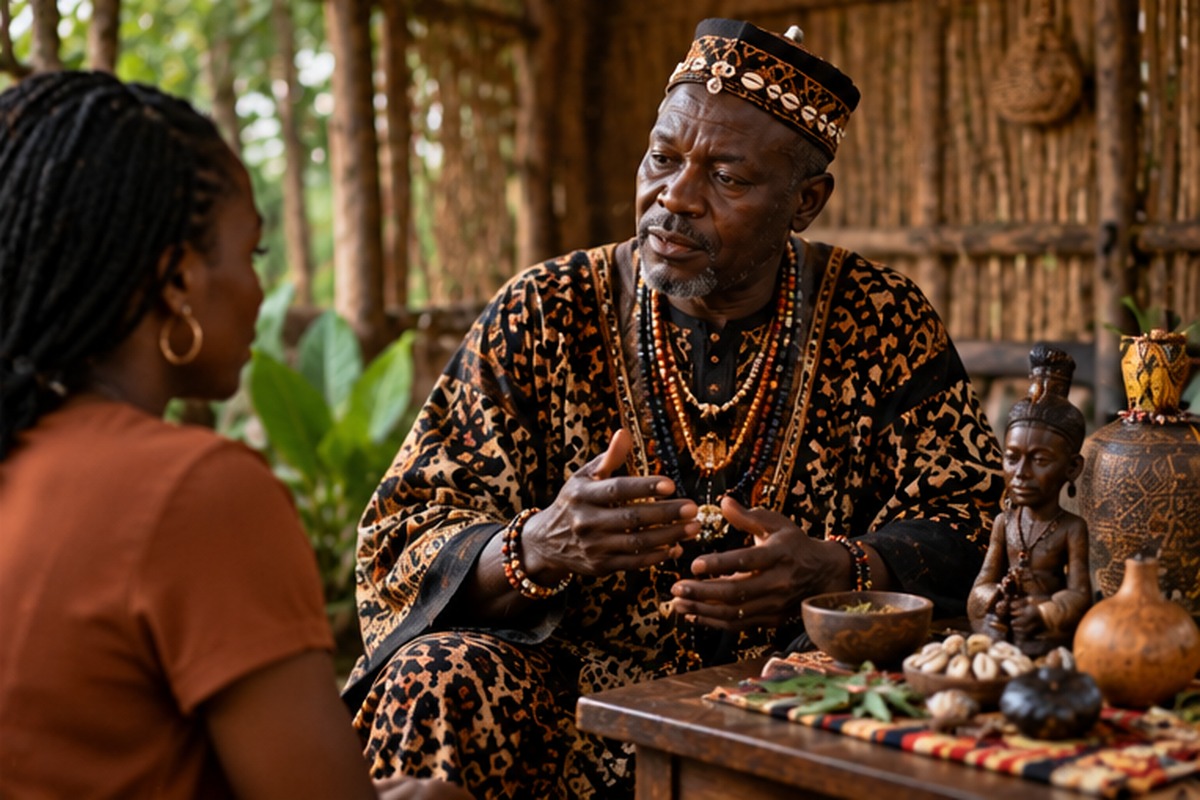
How Carlos Mukuru Approaches Spiritual Protection
Carlos Mukuru’s approach begins with listening.
He does not want someone to pay for spiritual work simply because they are frightened or desperate.
He first wants to understand the person’s situation and what they are hoping to change.
If he believes he can genuinely help, he explains what he believes is required.
If he believes he cannot help, he says so.
Carlos also personally performs the spiritual work he accepts rather than handing a client’s case to an unknown third party.
This is part of HerbalHealer’s wider commitment to transparency.
You can learn more about his background and approach on:
About Carlos Mukuru
Our Approach
Trust & Transparency
Spiritual Protection and Modern Life
Traditional spirituality has not necessarily disappeared simply because people now live in modern cities and use modern technology.
People can maintain cultural and spiritual traditions while also participating fully in modern life.
The WHO’s current work on traditional medicine recognizes the continuing importance of traditional knowledge while emphasizing research, safety, quality, and evidence. Its 2025–2034 strategy specifically focuses on evidence, safety, regulation, sustainability and respect for cultural diversity.
That balance is important.
Cultural tradition deserves respect.
At the same time, people deserve honest information about what is known, what is believed, and what remains uncertain.
A Responsible Way to Think About Spiritual Protection
If you are considering spiritual protection, ask yourself a few questions first:
What am I actually experiencing?
Try to describe the situation clearly rather than immediately assuming a supernatural explanation.
What am I hoping to change?
Knowing your goal can help you determine whether spiritual guidance is appropriate.
Is anyone using fear to sell me something?
Fear and urgency can make people vulnerable to poor decisions.
Are there practical steps I should take as well?
Spiritual practice does not prevent you from taking sensible practical action.
Does the practitioner explain their work honestly?
You should understand what you are paying for before agreeing to it.
Are they promising something no one could realistically guarantee?
Absolute promises are an important warning sign.
Final Thoughts
Spiritual protection has different meanings across cultures and traditions.
Within African spiritual traditions, ideas surrounding protection, cleansing, community, ancestral relationships, and ritual have deep cultural histories. But African spirituality is diverse, and no single practice represents the entire continent.
For people who believe in spiritual practices, consultation may provide a way to explore those beliefs and traditions.
At the same time, responsible spiritual guidance should distinguish belief and tradition from scientific fact.
It should not rely on fear, guarantee impossible outcomes, encourage harmful practices, or replace appropriate medical, mental-health, legal, or personal safety support.
For anyone seeking spiritual protection, the most important starting point is not fear.
It is understanding your situation, asking questions, and making an informed decision.
Thinking About Spiritual Guidance?
If you would like to discuss your situation with Carlos Mukuru, you can begin with a private spiritual consultation.
Use the WhatsApp button at the bottom-right of the page to start a conversation.
You can also learn more about Spiritual Cleansing and Spiritual Protection
Sources & Further Reading
- World Health Organization — Traditional Medicine: Questions & Answers
https://www.who.int/news-room/questions-and-answers/item/traditional-medicine - WHO Global Traditional Medicine Centre — Research and Evidence
https://www.who.int/teams/who-global-traditional-medicine-centre/research-and-evidence - WHO Regional Office for Africa — Traditional Medicine
https://afro.who.int/health-topics/traditional-medicine - WHO — Pharmacovigilance for Traditional Medicine Products
https://www.who.int/publications/i/item/10665-259854 - WHO — African Traditional Medicine Day 2026
https://www.who.int/news/item/31-08-2026-african-traditional-medicine-day-2026–from-research-to-reach–advancing-health-for-all - WHO — Global Report on Traditional, Complementary and Integrative Medicine 2024
https://www.who.int/publications/i/item/9789240111387
