


Light has carried symbolic meaning for thousands of years.
Candles appear in religious ceremonies, memorials, festivals, meditation practices, and spiritual rituals across many cultures.
In modern spiritual communities, candle magic generally refers to practices that use a candle as part of a ritual intended to represent an intention, prayer, hope, transformation or desired outcome.
But candle practices are not one universal tradition.
Their meanings have changed across cultures and periods of history.
This article explores where candle symbolism comes from, how candles became associated with ritual practices, what people mean when they talk about candle magic, and how to approach these traditions responsibly.
What Is Candle Magic?
Candle magic is a broad modern term for ritual practices involving candles.
Depending on the tradition, a person may light a candle while focusing on an intention such as:
- love
- peace
- protection
- healing
- prosperity
- gratitude
- spiritual reflection
- letting go
- personal transformation
The candle may function as a symbolic focus for the person’s intention.
Different traditions attach different meanings to colours, scents, words, prayers, and other ritual elements.
There is no single universally accepted system of candle magic.
This is important because many websites present candle symbolism as though every colour or ritual has exactly the same meaning everywhere.
Historically, ritual practices are much more diverse than that.
Why Are Candles Associated With Spirituality?
One obvious reason is light.
Before modern electric lighting, producing light after sunset required effort and resources.
Fire and light therefore carried practical and symbolic importance.
Across different religious traditions, light has been associated with ideas such as:
- life
- knowledge
- hope
- divine presence
- remembrance
- purity
- guidance
The symbolism differs considerably between traditions.
For example, the Metropolitan Museum of Art documents the important ceremonial role of the Paschal candle in Christian Easter observance.
The British Museum also documents candleholders used in religious ceremonies in Buddhist contexts in Southeast Asia.
These examples show that candles are not exclusively connected with modern “spell casting.”
Their ritual history is much broader.
Is Candle Magic an Ancient Practice?
The answer requires some nuance.
People have used fire, lamps, incense, and other forms of light in ritual contexts for a very long time.
However, the specific modern phrase “candle magic” should not simply be projected backward onto every ancient ritual involving fire or candles.
Historical magical traditions were often much more complicated.
They could involve:
- spoken words
- written symbols
- incense
- objects
- plants
- prayers
- offerings
- timing
- ritual preparation
Harvard’s Center for the Study of World Religions notes that the term magic itself has a complicated history and has been interpreted differently by religious practitioners and scholars.
This distinction helps us avoid turning a complex history into a simple modern story.
Is Candle Magic an Ancient Practice?
The answer requires some nuance.
People have used fire, lamps, incense, and other forms of light in ritual contexts for a very long time.
However, the specific modern phrase “candle magic” should not simply be projected backward onto every ancient ritual involving fire or candles.
Historical magical traditions were often much more complicated.
They could involve:
- spoken words
- written symbols
- incense
- objects
- plants
- prayers
- offerings
- timing
- ritual preparation
Harvard’s Center for the Study of World Religions notes that the term magic itself has a complicated history and has been interpreted differently by religious practitioners and scholars.
This distinction helps us avoid turning a complex history into a simple modern story.
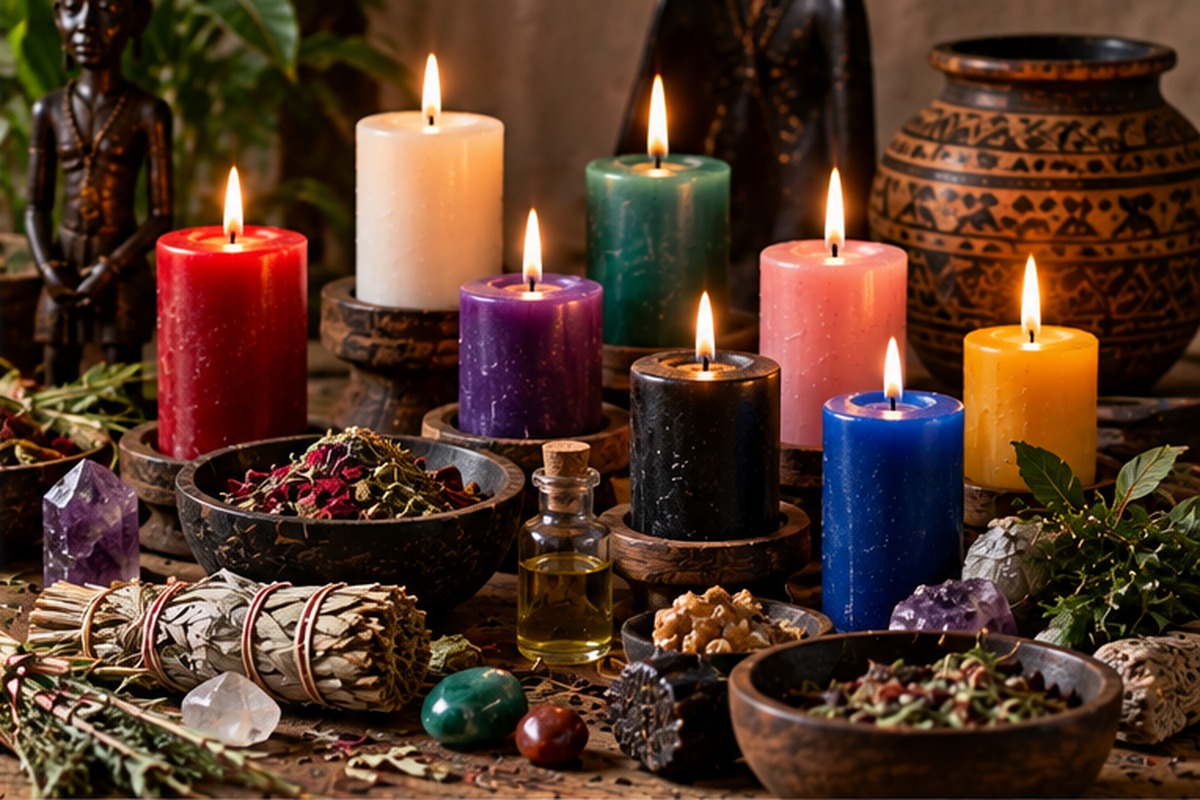
What Do Candle Colours Mean?
Modern candle-magic traditions often assign meanings to colours.
You may encounter systems such as:
| Colour | Common modern association |
|---|---|
| White | Peace, purification, clarity |
| Red | Love, passion, courage |
| Pink | Affection, friendship, emotional harmony |
| Green | Growth, prosperity, abundance |
| Blue | Peace, communication, calm |
| Purple | Spirituality, reflection, intuition |
| Black | Protection, endings or release |
| Yellow | Confidence, optimism, focus |
But these associations should be treated as tradition-specific symbolism, not universal facts.
Different practitioners and traditions may interpret colours differently.
There is also no scientific evidence establishing that a particular candle colour produces a particular external outcome.
Does Candle Magic Actually Work?
This is where it is important to separate belief, symbolism, and scientific evidence.
People may sincerely believe that a candle ritual helped them.
A ritual can also provide a structured moment for reflection and intention.
But that is different from demonstrating scientifically that lighting a particular candle causes an external event.
There is no reliable scientific evidence establishing that candle magic can guarantee outcomes such as:
- making another person fall in love
- forcing someone to return
- controlling another person’s behaviour
- guaranteeing wealth
- preventing every misfortune
- removing illness
- controlling another person’s free will
A responsible spiritual website should not present such claims as established scientific facts.
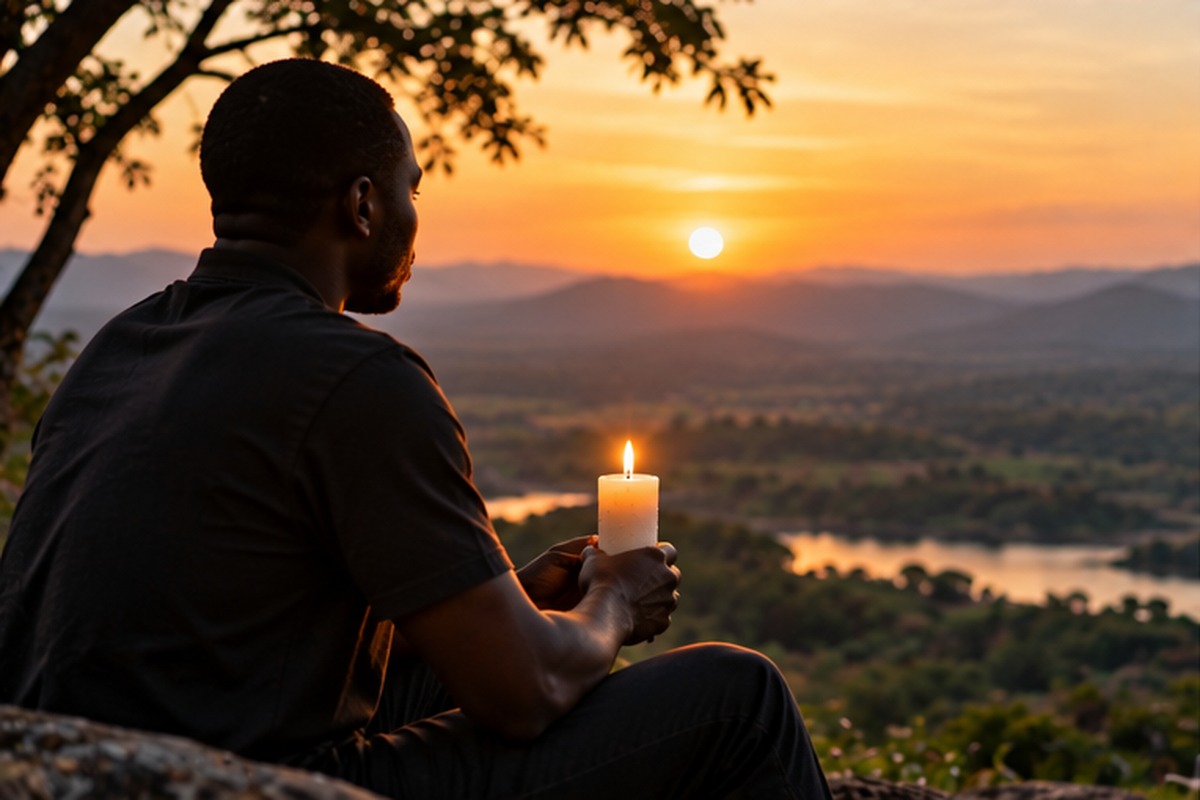
Candle Magic and Personal Intention
One reason candle rituals remain popular is that they can provide a physical focus for an intention.
Imagine someone going through a difficult breakup.
Lighting a candle may become a personal moment to think about:
What do I actually want?
What am I willing to change?
What do I need to let go of?
What kind of relationship do I want in the future?
The candle itself does not need to be presented as scientifically producing the outcome for the ritual to have personal meaning.
The ritual can provide structure for reflection.
Candle Magic and Love
Love is one of the most common subjects associated with modern candle rituals.
People may search for candle rituals involving:
- attracting love
- strengthening a relationship
- reconciliation
- emotional healing
- moving on from an ex
- improving self-confidence
However, there is an important ethical boundary.
Seeking personal clarity or emotional healing is different from trying to control another person’s choices.
At HerbalHealer, love-related spiritual work is not presented as a way to remove someone’s free will, create obsession, or force a person to love someone.
This is consistent with the approach discussed throughout our Knowledge Centre articles on love spells, relationships and free will.
Candle Magic and African Spiritual Traditions
Candles should not automatically be described as an ancient universal African spiritual practice.
African spirituality is extremely diverse.
Different communities have their own traditions involving:
- fire
- lamps
- herbs
- incense
- prayer
- offerings
- sacred spaces
- ritual objects
The presence and meaning of candles can vary considerably.
Modern African spiritual practitioners may also combine inherited cultural traditions with practices encountered through Christianity, Islam, global spirituality and contemporary spiritual communities.
Therefore, when discussing African candle rituals, cultural context matters.
It is better to ask:
Which African tradition?
Which community?
What period?
What does the candle mean within that particular practice?
Rather than assuming that one candle ritual represents African spirituality as a whole.
Candles and Ritual Objects
Candles are often used alongside other physical objects.
Depending on the tradition, these may include:
- bowls
- fabrics
- flowers
- herbs
- photographs
- beads
- religious objects
- written prayers
- incense
Scholars studying the material culture of magic have emphasized that objects can play important roles in ritual practices and beliefs across different cultures and historical periods.
The important point is that an object’s meaning comes from its cultural and ritual context.
A bowl or herb does not have one universal spiritual meaning.
What About Incense and Smoke?
Incense is another practice frequently associated with spiritual rituals.
Burning aromatic materials has a long history across cultures.
The University of Chicago Press publication Holy Smoke: Censers Across Cultures describes incense as a widespread religious practice across historical periods and religions and examines how censers and smoke function within religious contexts.
However, incense and smoke also have practical health and fire-safety considerations.
A spiritual ritual should never involve deliberately exposing someone to dangerous smoke or burning materials in an unsafe environment.
Candle Rituals and Safety
Candle rituals involve an actual flame, so basic safety matters.
Always consider:
- keeping candles away from curtains and other flammable materials
- using a stable candle holder
- never leaving a burning candle unattended
- keeping candles away from children and pets
- extinguishing candles properly
- avoiding unstable outdoor locations
- keeping water or appropriate fire-safety equipment available where appropriate
Spiritual practice should never require unnecessary physical risk.
What Candle Magic Should NOT Involve
A responsible spiritual practice should not involve:
- secretly putting substances into someone’s food or drink
- toxic materials
- dangerous chemicals
- deliberately harming animals
- threats
- coercion
- stalking
- controlling another person’s movements
- forcing someone to participate
- replacing necessary medical treatment
- guaranteeing impossible results
A practitioner should also be willing to explain what they are asking a client to do before the client agrees.
Can Candle Rituals Be Used for Personal Growth?
Yes, many people use symbolic rituals as part of personal reflection.
For example, someone might light a candle while reflecting on:
A new beginning
Forgiveness
Gratitude
A difficult relationship
A personal goal
Moving forward after a breakup
The ritual can create a deliberate pause in an otherwise busy life.
Whether someone interprets that experience spiritually, psychologically, culturally, or simply as a meaningful personal routine is ultimately their own perspective.
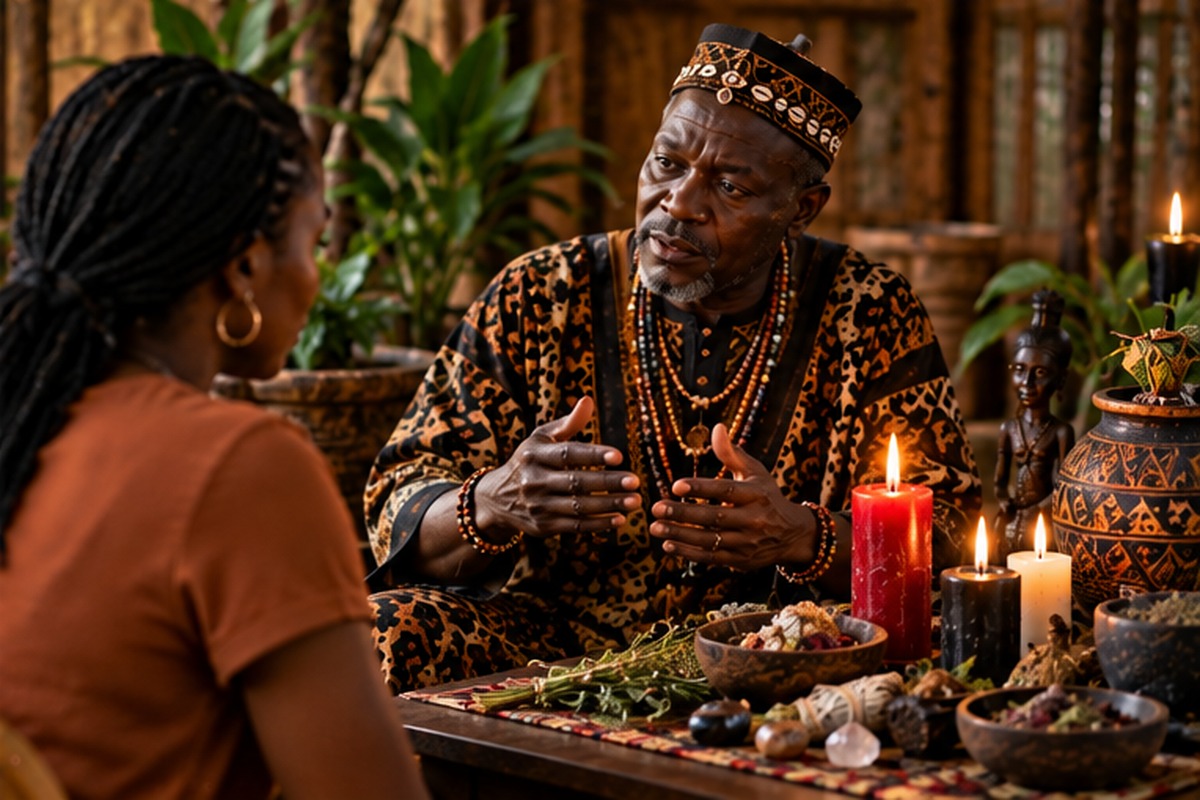
How Carlos Mukuru Approaches Spiritual Work
Carlos Mukuru’s approach begins with listening rather than immediately prescribing a ritual.
He first wants to understand:
- what the person is experiencing
- what they want to change
- what they have already tried
- whether he believes he can genuinely help
If he believes he cannot help, he says so.
If he believes spiritual work may be appropriate, he explains what he believes is required.
He personally performs the spiritual work he accepts.
And importantly, he does not promise guaranteed outcomes.
You can learn more about his approach on our About Carlos Mukuru, Our Approach, and Trust & Transparency pages.
Is Candle Magic the Same as Religion?
Not necessarily.
Candles appear in many religious traditions, but candle magic is also used in contemporary spiritual and folk-practice communities that do not identify with one particular religion.
The words religion, spirituality, ritual, and magic can have different meanings depending on the person and cultural context.
Harvard’s Center for the Study of World Religions notes that “magic” itself has been defined in substantially different ways across historical and scholarly contexts.
That is why responsible educational writing should avoid treating these categories as simple universal definitions.
What Should You Expect From a Responsible Practitioner?
If you are considering any form of candle or spiritual ritual, ask questions first.
You should understand:
- what the practitioner is offering
- what the ritual is intended to represent
- what you will be asked to provide
- how much it costs
- whether additional payments may be required
- who actually performs the work
- what the practitioner can and cannot promise
Be particularly cautious about anyone claiming:
“100% guaranteed.”
“I can control their mind.”
“Your ex will return in 24 hours.”
“You will become rich after this ritual.”
“Only I can remove this problem.”
Fear and impossible promises are not a substitute for honest spiritual guidance.
For more information, read:
How to Avoid Spiritual Scams: 15 Warning Signs to Watch For
Candle Magic in Modern Spiritual Practice
Today, candle rituals exist in many forms.
Some are inherited from religious or cultural traditions.
Others have developed through folk practices, modern witchcraft, contemporary spirituality, and online communities.
The internet has also made it easier for practices from different cultures to mix.
This can create interesting new traditions, but it can also cause cultural practices to be removed from their original context.
Learning where a practice comes from is therefore just as important as learning what someone claims it can do.
Final Thoughts
Candle magic is a broad modern term covering a variety of ritual and symbolic practices.
Candles themselves have much older and wider histories than modern spell-casting culture. They have been used in religious ceremonies, festivals, remembrance, meditation and other cultural practices around the world.
The meaning of a candle depends on the tradition, community and individual using it.
For someone who follows a spiritual practice, lighting a candle may represent prayer, intention, protection, love, reflection or transformation.
But symbolic meaning should not automatically be presented as scientific proof that a candle can control external events or another person’s free will.
The most responsible approach is to respect spiritual traditions while remaining honest about what is belief, cultural practice, personal experience, and established evidence.
Thinking About Spiritual Guidance?
If you would like to discuss a personal situation with Carlos Mukuru, you can begin with a private spiritual consultation.
Use the WhatsApp button at the bottom-right of the page to start a conversation.
You can also explore:
Sources & Further Reading
- Harvard Center for the Study of World Religions — Magic
https://cswr.hds.harvard.edu/news/2026/07/16/magic - The Metropolitan Museum of Art — Paschal Candlestick
https://www.metmuseum.org/art/collection/search/471239 - British Museum — Candle-holder; religious/ritual equipment
https://www.britishmuseum.org/collection/object/A_1894-0926-16 - University of Chicago Press — Holy Smoke: Censers Across Cultures
https://press.uchicago.edu/ucp/books/book/distributed/H/bo207624019.html - JSTOR — The Materiality of Magic: An Artifactual Investigation into Ritual Practices and Popular Beliefs
https://www.jstor.org/stable/j.ctt19dzdsw - Cambridge University Press — The Social Life of Wax in the Premodern Maghrib
https://www.cambridge.org/core/journals/comparative-studies-in-society-and-history/article/social-life-of-wax-in-the-premodern-maghrib/0BA860F9F09E38D01A84D895F2F88384
