

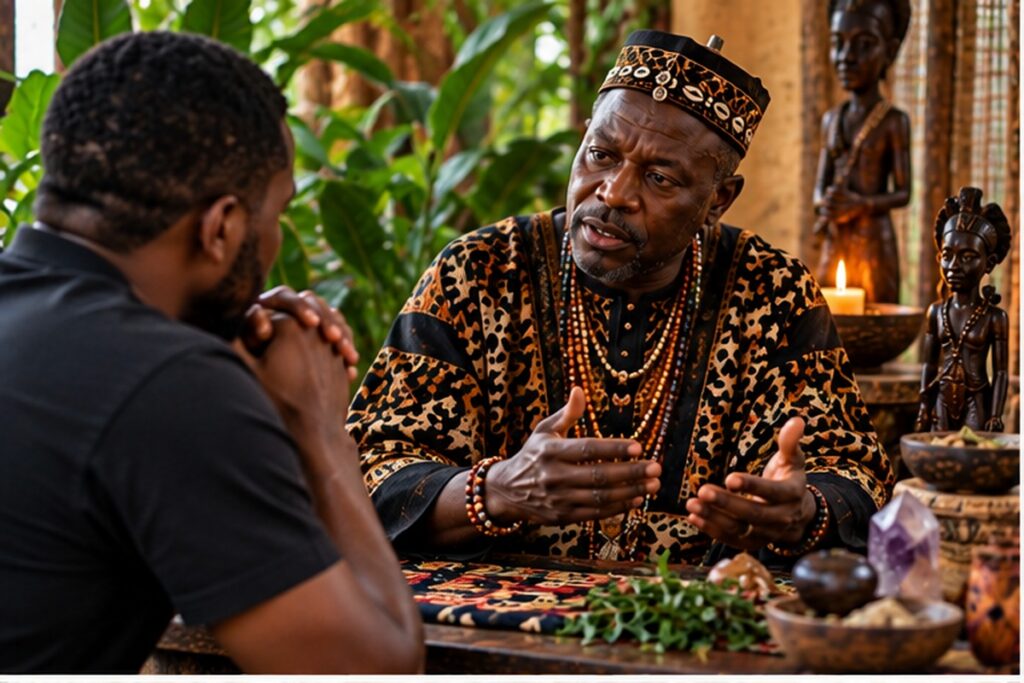
What Is a Traditional Healer?
A traditional healer is a practitioner who works within a cultural tradition of healing, wellbeing, spirituality, herbal knowledge, ritual, or other inherited practices.
The exact meaning of “traditional healer” differs considerably between communities. Africa does not have one single traditional healing system. Practices, beliefs and practitioner roles vary between countries, ethnic groups, families and spiritual traditions.
The World Health Organization describes traditional medicine broadly as systems of knowledge, skills, practices and philosophies that originate within different historical and cultural contexts. WHO also emphasizes the importance of evidence, safety, quality and appropriate regulation when traditional medicine is used in healthcare.
In Uganda and elsewhere in Africa, the words used to describe a practitioner can also have meanings that do not translate neatly into English.
This is particularly important when discussing the Luganda word Musawo.
What Does “Traditional Healer” Mean?
“Traditional healer” is a broad English description rather than the name of one specific profession.
A traditional healer may work with:
- traditional herbal knowledge
- cultural healing practices
- spiritual guidance
- ritual practices
- ancestral traditions
- community-based knowledge
- personal or family traditions
- traditional approaches to physical or emotional wellbeing
Not every traditional healer does all of these things.
Some practitioners primarily work with herbs and traditional remedies. Others focus more heavily on spiritual practices. Some combine several traditions.
That is why it is important to understand what a particular practitioner actually does, rather than assuming that every traditional healer follows the same methods.
Is There One Type of African Traditional Healer?
No.
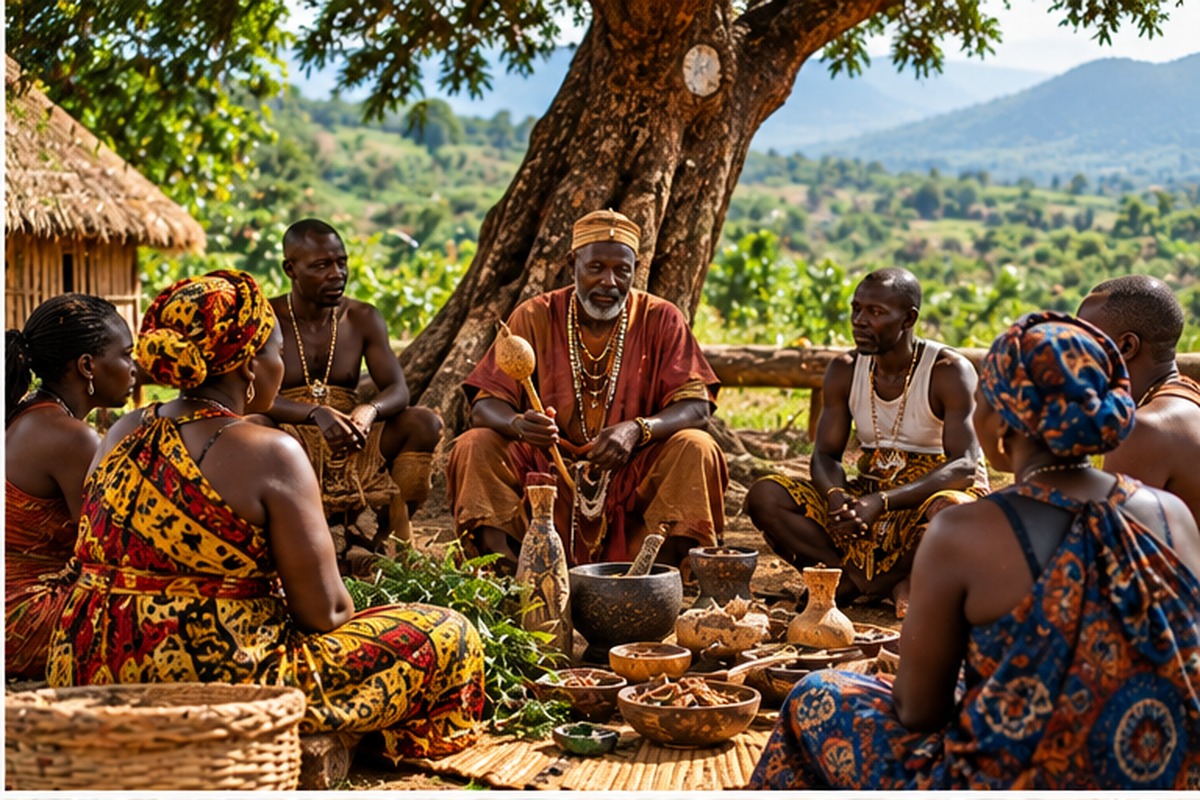
Africa contains hundreds of cultural and spiritual traditions, and the terminology used for traditional practitioners varies considerably.
A practitioner in Uganda may have a different role from one in Ghana, Nigeria, South Africa, Kenya, or another African country.
Even within Uganda, practices can differ between communities.
Some practitioners may concentrate on traditional herbal knowledge, while others may describe their work primarily in spiritual terms. Some may inherit knowledge through a family lineage, while others learn through apprenticeships or particular cultural traditions.
This diversity is one reason the phrase African traditional healer should be treated as a broad description rather than a single standardized profession.
WHO’s current work on traditional medicine also recognizes the importance of cultural context, Indigenous knowledge, and local traditions while emphasizing the need for evidence and safety.
What Does a Traditional Healer Do?
The answer depends on the individual practitioner and their tradition.
A practitioner may provide services involving:
Traditional herbal knowledge
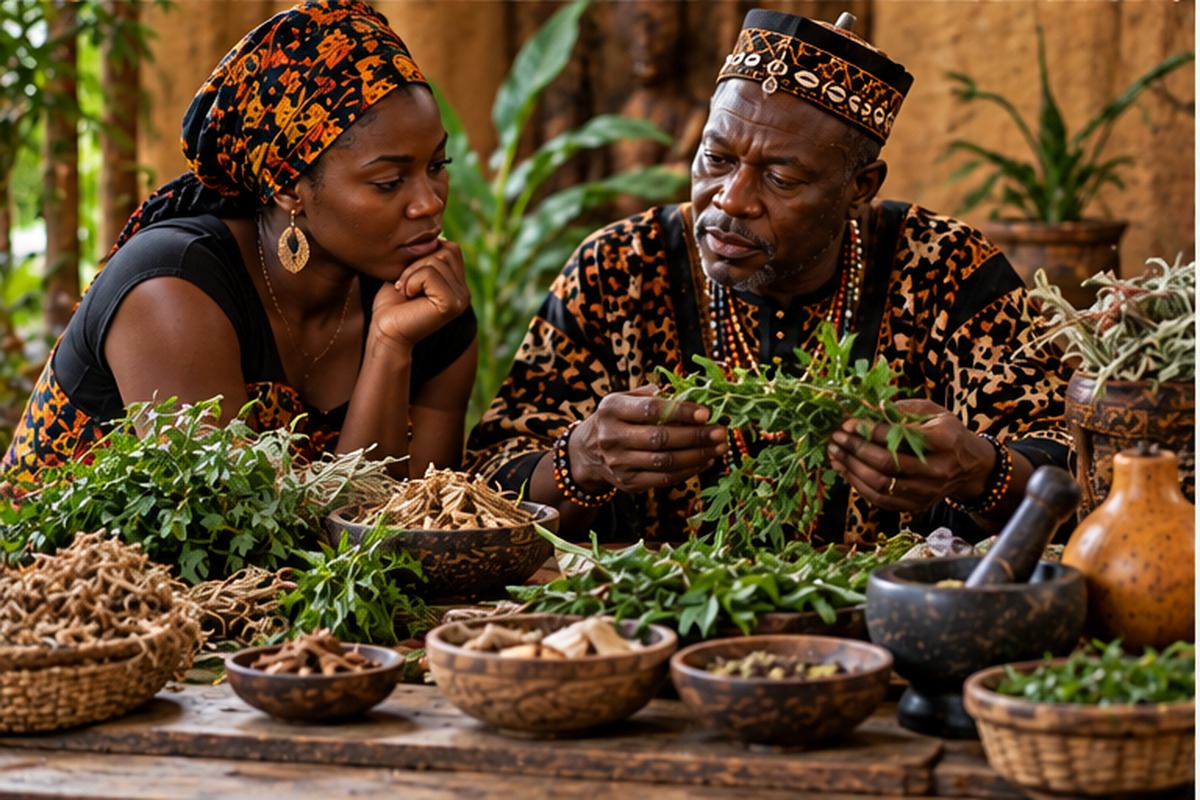
Some traditional practitioners have inherited knowledge about plants and natural materials traditionally used within their communities.
This does not automatically mean that every traditional remedy has been scientifically demonstrated to be effective or safe.
Herbs can contain biologically active substances, and interactions, contamination, incorrect identification, or inappropriate use can create risks. WHO therefore places considerable emphasis on quality, safety, evidence and appropriate regulation in traditional medicine.
Spiritual guidance
Some practitioners focus primarily on spiritual concerns rather than physical illness.
People may seek spiritual guidance because of personal difficulties, relationship problems, feelings of spiritual unease or questions about their cultural or spiritual traditions.
These experiences should be described as spiritual or cultural practices, rather than automatically presenting supernatural explanations as scientific facts.
Ritual and cultural practices
Traditional practitioners may also conduct rituals that have particular meanings within their cultural or spiritual traditions.
The meaning of these practices can vary considerably between communities.
Traditional Healer vs Spiritual Practitioner
The terms can overlap, but they are not necessarily identical.
| Traditional healer | Spiritual practitioner |
|---|---|
| Broad term covering traditional healing roles | Usually emphasizes spiritual guidance or spiritual practices |
| May include herbal or traditional health knowledge | May focus primarily on spiritual concerns |
| Can be rooted in a particular cultural tradition | Can be rooted in a religious, cultural or family tradition |
| May work with physical, emotional or spiritual concerns depending on tradition | Often focuses on spiritual and personal matters |
| Meaning varies significantly between cultures | Meaning also varies between traditions |
For HerbalHealer, African Spiritual Practitioner is the more precise description of Carlos Mukuru’s work because his services are centered on spiritual guidance and traditional spiritual practices rather than presenting himself as a medical doctor.
What Does “Musawo” Mean?
Musawo is a Luganda word whose meaning can vary according to context.
It is commonly translated into English as doctor, but the term can also be used more broadly for a healer or health worker. Academic writing on Buganda has documented this broader use, including references to local healers as musawo muganda.
A Luganda-English dictionary likewise gives musawo a range of meanings including doctor, nurse, medical person and traditional healer.
This creates an important translation issue.
Someone who is called Musawo in a Ugandan cultural setting should not automatically be assumed to hold a Western medical qualification.
For HerbalHealer, the term is used in its Ugandan cultural context, not as a claim that Carlos Mukuru is a medically qualified doctor.
That distinction is important for both transparency and international visitors who may interpret the English word “Doctor” differently.
Traditional Healing and Modern Medicine
Traditional healing and modern biomedical healthcare are not the same thing.
Modern medicine is based on established biomedical sciences, clinical research, professional training, regulation, and healthcare systems.
Traditional medicine encompasses diverse systems of knowledge and practice that originate from particular cultural and historical contexts. WHO’s current strategy aims to strengthen evidence, safety, and regulation while respecting traditional knowledge and cultural heritage.
This means that discussing traditional healing responsibly requires two ideas to be held at the same time:
Traditional knowledge deserves cultural understanding and respect.
And:
Individual traditional practices should not automatically be presented as scientifically proven medical treatments.
Those are not contradictory positions.
Is Traditional Healing Scientifically Proven?
There is no single answer because “traditional healing” covers many different practices.
Some traditional medicines and practices have been studied scientifically. Others have limited evidence. Some have not been adequately researched.
WHO’s latest global research priorities for traditional, complementary and integrative medicine specifically highlight gaps in evidence and the need for research that can inform safety, effectiveness, regulation and health-system use.
Therefore, it is better to ask:
What specific practice is being discussed, and what evidence exists for that practice?
That is more useful than asking whether all traditional healing “works” or “doesn’t work” as one category.
What About Traditional Herbs?
Traditional herbal knowledge is an important part of many African healing traditions.
However, “natural” does not automatically mean “safe.”
Plants can contain powerful biological compounds. The safety of a preparation can depend on the plant, identification, preparation method, dose, contamination, interactions with medicines and the individual using it.
For that reason, HerbalHealer does not present spiritual services as a replacement for medical diagnosis or treatment.
If someone has symptoms of a serious illness, an emergency or another condition requiring medical attention, they should seek appropriate healthcare.
Can Traditional Healers and Doctors Work Together?
In some countries and healthcare systems, traditional medicine and biomedical healthcare are being studied or considered within broader approaches to health.
WHO’s Global Traditional Medicine Strategy 2025–2034 emphasizes evidence, safety, regulation, people-centred care, cultural respect and appropriate integration rather than assuming that one system should simply replace another.
The important distinction is that collaboration should not mean pretending that different forms of practice have identical evidence or professional standards.
Someone can respect a cultural or spiritual tradition while still seeking qualified medical care when medical care is needed.
What About Spiritual Healers?
A spiritual healer or spiritual practitioner generally refers to someone whose work is centered on spiritual beliefs, practices or guidance.
People may seek spiritual practitioners for matters such as:
- personal spiritual concerns
- relationships
- emotional transitions
- reconciliation
- spiritual cleansing
- spiritual protection
- traditional rituals
- questions about cultural spirituality
The precise meaning varies from one tradition to another.
At HerbalHealer, spiritual work is presented as a traditional spiritual practice, not as a scientifically proven supernatural treatment.
Traditional Healers and Family Traditions
Traditional knowledge is sometimes passed through families.
This can include knowledge about plants, cultural practices, rituals, beliefs, community traditions and particular approaches to spiritual work.
In Buganda and other African communities, traditional knowledge has historically been connected with family, clan and community structures. Academic research on Buganda has documented traditional healing roles and the relationship between local healing practices and spiritual traditions.
However, having a family tradition does not by itself prove that every practice associated with that tradition is medically or scientifically effective.
It tells us something different:
where the practitioner’s knowledge and cultural framework come from.
That distinction is important.
Carlos Mukuru and the Ugandan Tradition
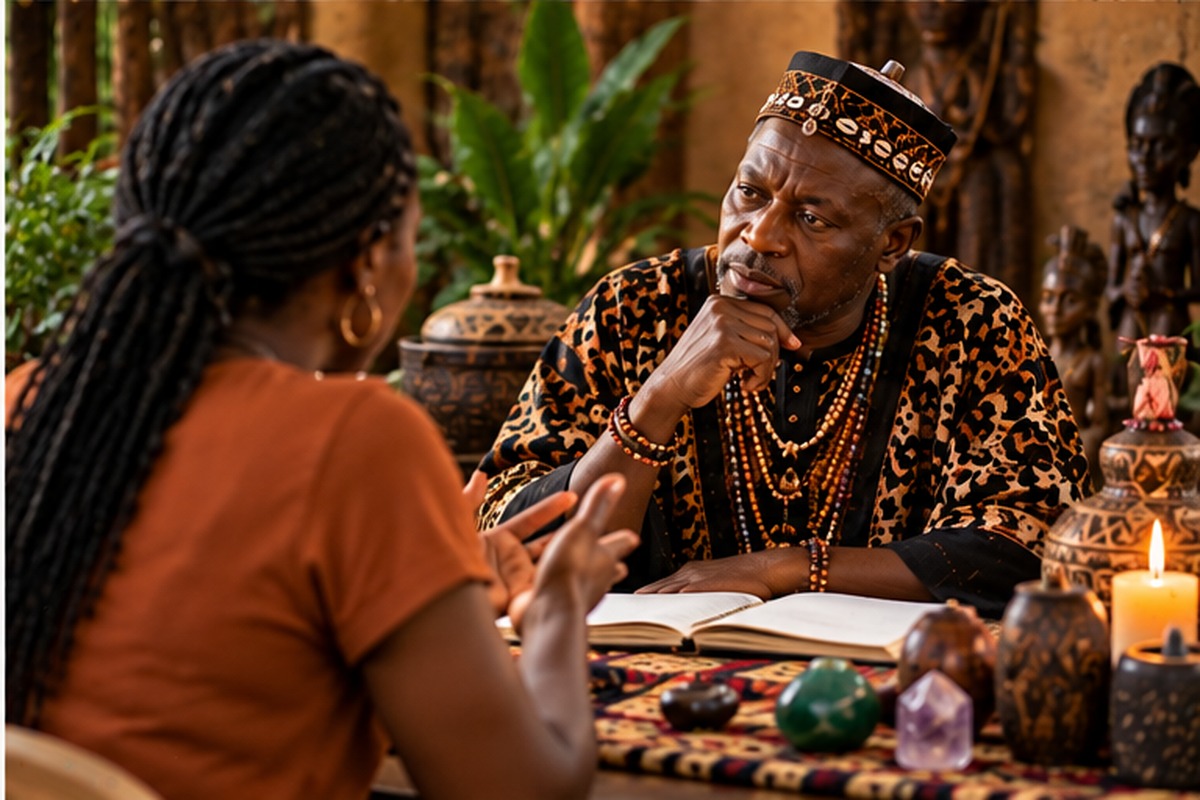
Carlos Mukuru’s approach comes from his personal family tradition.
His late grandfather was a spiritual and herbal healer, and Carlos began learning from him when he was about seven years old.
Over time, the family tradition became an important part of Carlos’s understanding of spiritual practice.
Carlos now works primarily as an African spiritual practitioner, providing spiritual guidance to people dealing with relationship, reconciliation, cleansing, protection, and other personal concerns.
His approach begins with listening.
Before recommending spiritual work, he seeks to understand what the person is experiencing, what they want, and whether he believes he can genuinely help.
If he believes he cannot help with a particular situation, he says so rather than promising something simply because someone is willing to pay.
You can learn more about his background and approach on the About Carlos Mukuru page.
What Makes a Responsible Traditional or Spiritual Practitioner?
Regardless of someone’s cultural tradition, there are practical questions worth asking before paying for spiritual services.
A responsible practitioner should be willing to explain:
- who they are
- what type of practice they provide
- what the service involves
- how much it costs
- who actually performs the work
- what the client should realistically expect
- whether additional costs may arise
- what happens if they believe they cannot help
Be especially cautious when someone:
- guarantees a specific result
- claims they can completely control another person’s mind
- promises that an ex will return by a particular date
- uses fear to pressure you into paying
- continually demands more money to “finish” the work
- tells you to secretly give someone an unknown substance
- asks you to harm yourself or another person
- claims you cannot seek outside help
- threatens you if you refuse to pay
Our guide How to Avoid Spiritual Scams explains these warning signs in greater detail.
You can also read How to Choose a Spiritual Practitioner before deciding whether a practitioner is right for you.
Traditional Spiritual Practice and Personal Responsibility
Seeking spiritual guidance does not remove personal responsibility.
For relationship problems, for example, spiritual practice does not replace communication, boundaries, honesty, or respect.
If a relationship involves violence, stalking, threats, or serious abuse, personal safety should come first.
Likewise, spiritual guidance should not prevent someone from seeking medical or mental-health support when that support is appropriate.
At HerbalHealer, spiritual practice is intended to exist alongside sensible real-world decisions—not instead of them.
Does Traditional Healing Guarantee Results?
No responsible practitioner can honestly guarantee every outcome of a spiritual or traditional practice.
People have different circumstances, beliefs, relationships, and responses.
A spiritual practitioner can explain what they offer and how they approach the work, but that is different from promising that a particular person will behave in a particular way or that a specific event will definitely happen.
This principle is especially important in relationship work.
Another person’s feelings, choices, and boundaries cannot be responsibly presented as something a practitioner can guarantee or control.
Why Cultural Context Matters
One of the biggest mistakes people can make when learning about African spirituality or traditional healing is treating Africa as though it has one single spiritual system.
It does not.
There are many African cultures, languages, histories, and traditions.
Even terms that appear straightforward in English can have much broader meanings in local languages.
Understanding this context helps visitors from outside Africa interpret traditional practices more accurately and avoid confusing cultural terminology with Western professional titles.
For people interested in African spirituality, cultural context is therefore just as important as understanding the particular practice itself.
Final Thoughts
So, what is a traditional healer?
A traditional healer is broadly a practitioner whose work is rooted in traditional cultural knowledge, practices or beliefs relating to healing and wellbeing.
But there is no single definition that accurately describes every traditional healer in Africa.
Some work with traditional herbal knowledge. Some focus on spiritual practices. Others combine different elements of their cultural traditions.
In Uganda, terms such as Musawo can also carry meanings that extend beyond the English word “doctor.” Understanding the local cultural context is therefore important.
Carlos Mukuru describes his own work more specifically as African spiritual practice and guidance. His approach is rooted in family tradition, personal experience and listening carefully to people before deciding whether and how he can help.
For anyone considering a traditional or spiritual practitioner, the most important practical principles are transparency, realistic expectations, respect for personal choice, clear pricing and personal safety.
Thinking About Spiritual Guidance?
To understand how Carlos Mukuru approaches spiritual consultations, visit our Spiritual Consultation page.
You can also learn more about Our Approach or read our Trust & Transparency information before contacting us.
If you already know what kind of support you are looking for, explore our spiritual cleansing, spiritual protection and relationship healing services.
Sources & Further Reading
- World Health Organization — Traditional Medicine
- World Health Organization — Global Traditional Medicine Strategy 2025–2034
- World Health Organization — Global research priorities for traditional, complementary and integrative medicine 2025–2034
- WHO Global Traditional Medicine Centre — Research and evidence
- WHO Africa — Traditional Medicine
- McConnachie — research on traditional healing and basawo/musawo in Buganda.
